
The Devil Met Kolhapuri… and Called It Pr@#@!!
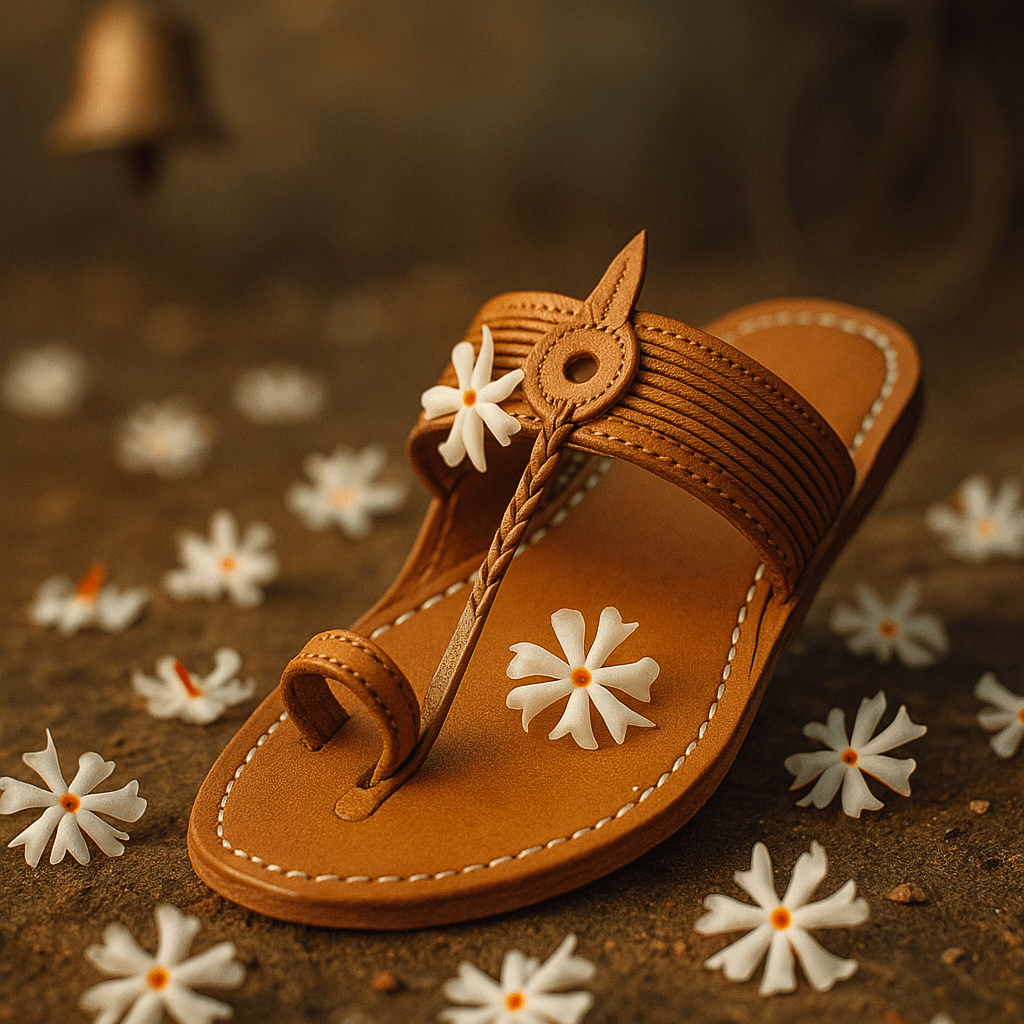

About few weeks ago, I bought my first pair of Kolhapuri chappals. It wasn’t just a shopping errand. It felt like bringing home a piece of history. I was in Kolhapur then, visiting my younger sister, and decided to explore the local markets around Shivaji Chowk and Mahalakshmi Mandir. The streets were alive with colour and motion. Women balanced baskets on their heads, children hopped across puddles, and the smell of jasmine mingled with temple incense and fresh leather. The drizzle only made it more magical.
In that lively, fragrant chaos, the Kolhapuri chappals stood quietly. They felt timeless, proud, and full of character.
These humble-looking slippers trace their origins back over 800 years. The earliest versions, known as Kapashi chappals, were crafted in the village of Kapashi for local royals. They were built to endure rough terrain while exuding grace. Over time, artisans from different villages brought their own interpretation to the design. What we call “Kolhapuri” today is a collective identity shaped by tradition, utility, and regional expression. The wide straps, pointed front, and intricate detailing have remained true to their roots, even as modern preferences evolve.
I learned much of this from reading various articles and posts online. A lovely conversation with the shop owner where I bought my pair gave me a deeper appreciation for the hands behind the craft—hands that are rarely seen, but whose work lives on through every step we take in these chappals.
According to the Leather Industries Development Corporation of Maharashtra (LIDCOM), over 20,000 artisans in the state depend on Kolhapuri chappal-making for their livelihood. Many of them are women, who handle tasks like leather processing, cutting, dyeing, polishing, and stitching. Often, they work from home while balancing domestic responsibilities. It is a slow, detailed process passed down through generations by observation and practice. No machines are involved—just tradition, patience, and pride. The leather is sun-dried, vegetable-tanned, softened with neem or castor oil, and stitched entirely by hand. Each pair is unique, a quiet testimony of craft.
But lately, this proud legacy has come under a different kind of spotlight.
Earlier this year, luxury fashion house Prada released a slipper design that bore a striking resemblance to the traditional Kolhapuri chappal. Yet, there was no credit, no cultural context, and no mention of the Indian artisans whose legacy it mirrored. It was marketed as “minimalist luxury,” erasing centuries of rich heritage in a single swipe of branding.
Recently, Prada’s team visited Kolhapur. On paper, this might look like a move toward recognition. In reality, it feels more like damage control—an image-cleaning exercise after public backlash. I worry that, in the name of “taking Kolhapuris global,” the original creators might be tokenised or sidelined. Their designs may be extracted, repackaged, and profited from, without real empowerment, fair compensation, or visibility.
What the Kolhapuri chappal community needs is not just a nod from the luxury world. It is sustainable recognition, fair trade, opportunity, investment, and above all, respect. These artisans do not seek applause. They seek dignity. And they deserve it.
If you are picking up a pair, know that you are not just buying footwear. You are supporting generations of skill, a grassroots economy, and a cultural identity. These chappals are not about trends. They are about timelessness and belonging. They deserve to be celebrated not for how global brands style them, but for how they have quietly walked across centuries, homes, and lives—gracefully and purposefully.
I hope more people discover Kolhapuris. But I hope they do so by acknowledging their roots and the hands that still make them, one stitch at a time.
 "In Ink and Insight"
Leave a comment